

Key Takeaways
- Room size and shape influence what audio setup will actually sound good in your home.
- Soundbars suit smaller spaces and renters; dedicated speakers reward larger or permanent setups.
- Your listening habits - TV, music, or both - should drive format and component choices.
- Acoustics matter as much as gear: hard surfaces and bare walls degrade any system's sound.
- A modest, well-matched setup consistently outperforms expensive gear in the wrong space.
Start here
Why Room Size and Layout Come First
Next
Matching Audio Formats to Your Space
Then
How Listening Habits Should Shape Your Gear
When you're ready
Budgeting Realistically for Home Audio
Final step
Where to Go From Here
Why Room Size and Layout Come First
Most people shopping for home audio start with gear - speakers, soundbars, receivers - before they've thought carefully about the room those components will live in. That's understandable, but it often leads to mismatched systems: bass that booms in a small apartment, or thin, underwhelming sound in a large open-plan space.
Before evaluating any product, measure your room and note its shape. A studio apartment and a dedicated media room with 15-foot ceilings have almost nothing in common acoustically. Small, enclosed rooms don't need much output to fill up; larger or open-plan spaces demand more power and often more speakers to sound balanced.
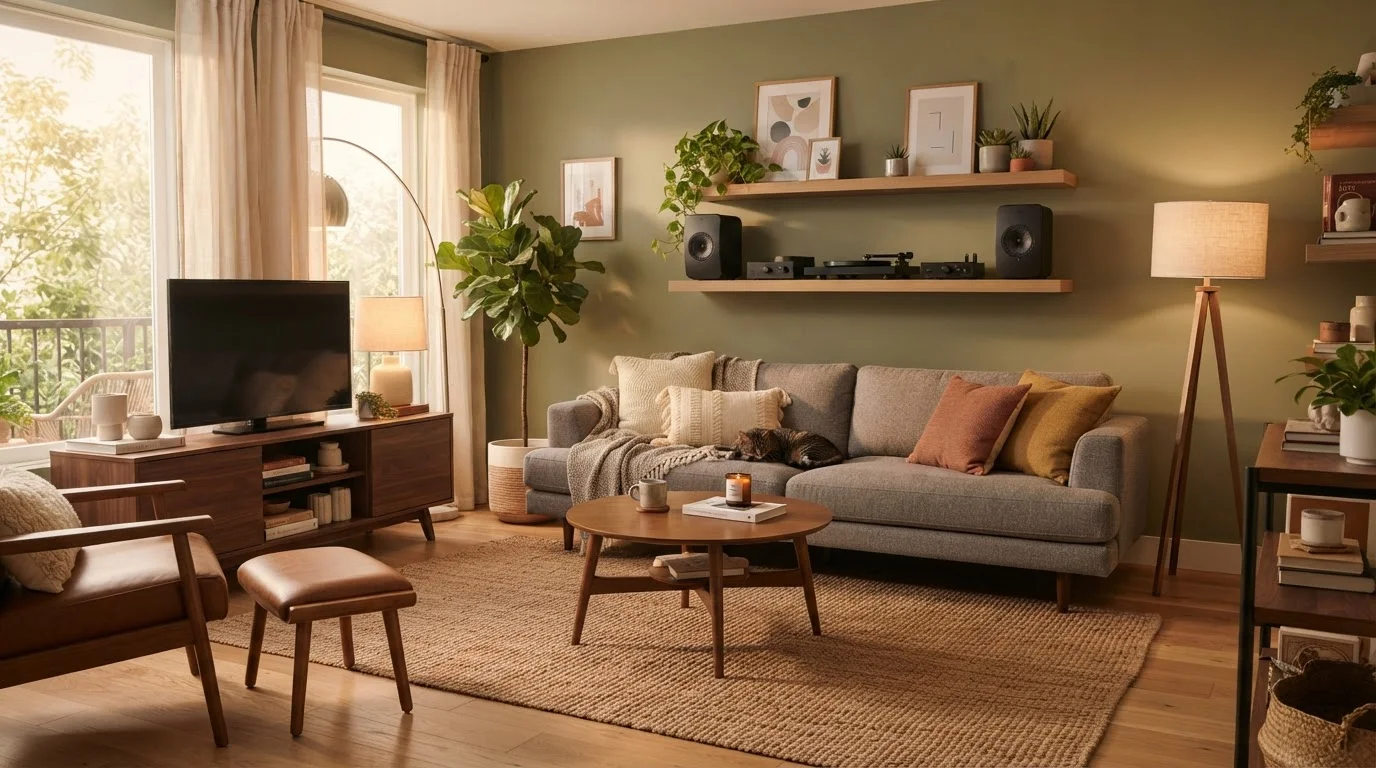
The surfaces around you matter just as much as square footage. As our guide on room acoustics explains, hard floors, glass walls, and bare ceilings bounce sound in ways that muddy the listening experience. If your space has a lot of reflective surfaces, a straightforward two-speaker stereo setup with some basic acoustic treatment (rugs, curtains, bookshelves) will serve you better than a complex surround system at twice the price.
Stereo
A two-channel audio format using a left and right speaker to create a sense of width and space in the sound.
Surround sound
An audio format that uses multiple speakers placed around the listener to simulate a 360-degree sound environment, commonly described as 5.1 or 7.1.
AV receiver
A central hub device that accepts audio and video signals from sources like a TV or streaming player, amplifies them, and sends power to connected speakers.
Room acoustics
The way sound behaves within a specific room, shaped by the size, shape, and materials of the walls, floors, and furnishings.
Soundstage
The perceived width and depth of sound from a speaker system - a wide soundstage makes music feel like it extends beyond the physical speakers.
Powered speaker
A speaker with a built-in amplifier, meaning it connects directly to an audio source without needing a separate receiver or amp.
Matching Audio Formats to Your Space
Once you understand your room, the next question is format: stereo, soundbar, or full surround sound? Each has a natural home. Our overview of home audio formats covers these in detail, but here's a practical summary for matching format to space.
- Soundbars are well-suited to small-to-medium rooms, renters, and anyone who wants a low-profile setup that improves on TV speakers without requiring cable management or speaker stands. They sit under or near a TV and require no additional components.
- Stereo setups (two speakers plus an amplifier or receiver) work well for dedicated music listening in any room size. A well-positioned stereo pair can create a surprisingly wide and immersive soundstage.
- Surround sound systems - typically 5.1 (five speakers plus a subwoofer) or more - are best suited to rooms large enough to place rear speakers behind the listening position. In tight spaces, surround effects often collapse and the setup feels cluttered rather than cinematic.
Placement compounds the effect of any format. Where you position your speakers can transform a mid-range system or undermine an expensive one.
Start With Placement Before Spending More
Before upgrading any component, experiment with speaker position. Moving speakers even a foot closer to your listening seat, angling them inward, and pulling them away from walls can meaningfully improve clarity and bass balance. These changes cost nothing and often have a bigger effect than a hardware upgrade at the same price.
How Listening Habits Should Shape Your Gear
The way you actually use audio at home should be a primary filter on your decisions - not just room size. Two people can have identical apartments but very different audio needs.
If you primarily watch TV and movies, clarity in the dialogue range matters most. A soundbar with a dedicated center channel or a stereo receiver with a center speaker will make voices easier to follow without needing a full surround array. If you're a music listener, a two-channel stereo setup almost always delivers a more accurate, enjoyable result than a home theater system at a similar price point.
Consider also how often you listen critically versus as background. Background listeners often find that a compact powered speaker on a shelf meets their needs completely. Critical listeners - those who sit in front of their system and actively engage with what's playing - generally benefit from investing in better speakers and amplification, as well as thinking carefully about streaming audio quality and source quality.
Don't Overlook Source Quality
A high-quality speaker system will expose weaknesses in low-bitrate audio streams or compressed files - the better your gear, the more noticeable your source quality becomes. If you're investing in a solid stereo or surround setup, it's worth reviewing your streaming service's audio quality settings and considering a higher-tier audio plan if one is available.
Budgeting Realistically for Home Audio
Home audio spans an enormous price range, from under $100 to tens of thousands of dollars. The good news is that meaningful sound quality is accessible at modest budgets, especially when the system is matched to the room. Overspending on gear for a space that can't take advantage of it is one of the most common and avoidable mistakes.
A useful mental model: allocate roughly 60-70% of your audio budget to speakers (or a soundbar), and the remainder to the amplifier or receiver that powers them. Speakers have the largest impact on the character of sound; amplifiers mostly need to be adequate rather than exceptional. The budgeting principles that apply to other consumer purchases apply here - set a ceiling before you start shopping, and resist upselling once you're in a store or on a product page.
If you're just getting started and want to invest incrementally, a receiver-based system lets you upgrade individual components over time. Soundbars and all-in-ones are harder to expand, though some support add-on subwoofers or rear satellites if you want more later.
Where to Go From Here
Once you've assessed your room and clarified your habits and budget, the practical steps of building a system become much more straightforward. Our guide to setting up a home theater system from scratch walks through connecting components - speakers, receiver, and TV - even if you've never done it before.
If you're still weighing whether a receiver or a soundbar better fits your situation, the receiver vs. soundbar comparison lays out the trade-offs across complexity, cost, and performance in detail.
The core principle to carry forward: a modest, well-matched system beats an expensive, mismatched one almost every time. Your room is the constraint that makes everything else make sense.
Home Audio Formats Explained
Our breakdown of stereo, surround sound, and soundbars helps clarify which format is a realistic fit for your room and use case before you commit to any hardware.
Room Acoustics Primer
Understanding how your room's surfaces shape sound is essential groundwork for any audio setup. This guide explains the acoustic principles that apply to every listener.
Speaker Placement Guide
A practical reference for positioning speakers to get the most out of any system - covering angles, distances from walls, and listening seat placement.