

Key Takeaways
- Credit scores range from 300 to 850; higher scores signal lower credit risk to lenders.
- Your score is calculated from information in your credit report, not from your income.
- Payment history and credit utilization together make up a large portion of your score.
- Multiple scoring models exist; lenders choose which one they use.
- You can check your own score without hurting it - that's a soft inquiry.
Credit Score
A credit score is a three-digit number, typically ranging from 300 to 850, that summarizes how reliably you've managed borrowed money. Lenders, landlords, and sometimes employers use it to quickly assess whether extending credit to you is a reasonable risk. The higher the number, the more favorably creditors tend to view you.
The most widely used scoring model in the US is the FICO Score, though VantageScore is also common. Both use the same 300-850 range but weight certain factors slightly differently.
Where the Number Comes From
Your credit score is calculated using data pulled from your credit report - the running record that Equifax, Experian, and TransUnion each maintain about your borrowing behavior. Importantly, your income, bank balance, and net worth are not part of the calculation. The score reflects only how you've handled debt.
Several factors feed into the formula. Payment history - whether you pay on time - carries the most weight. How much of your available credit you're currently using (called credit utilization) is the next biggest driver. The length of your credit history, the mix of account types you carry, and recent applications for new credit round out the picture. For a deeper breakdown of each factor, see the five factors that shape your credit score.
716
Average US FICO Score
According to FICO's most recently published data, the average American's FICO Score was 716, placing the typical consumer in the 'good' range.
~45M
Credit-invisible Americans
The Consumer Financial Protection Bureau has estimated that tens of millions of US adults have no scoreable credit history, limiting their access to mainstream financial products.
35%
Weight of payment history in FICO Score
FICO publicly states that payment history - whether you pay on time - is the single largest component of the standard FICO Score calculation.
What the Score Ranges Actually Signal
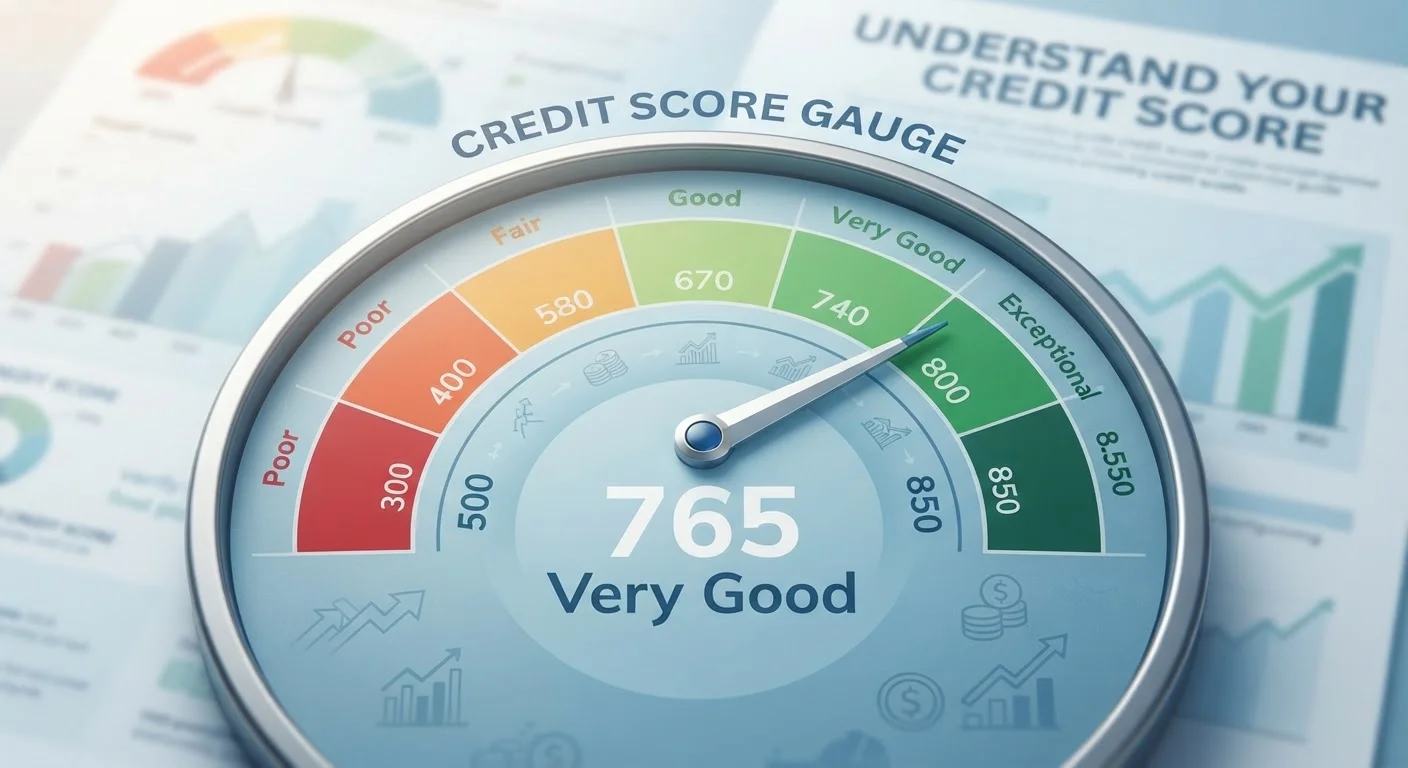
Scoring models divide the 300-850 range into tiers that lenders use as shorthand for risk. While exact cutoffs vary by lender and model, FICO's general bands look like this:
- 800-850 (Exceptional): Access to the most favorable terms on loans and cards.
- 740-799 (Very Good): Typically qualifies for competitive interest rates.
- 670-739 (Good): Near or above the average US score; most mainstream credit products are accessible.
- 580-669 (Fair): Some lenders will work with you, but often at higher rates.
- 300-579 (Poor): Approval is difficult; secured products and credit-building tools are typical starting points.
It's worth knowing that a single score isn't the whole picture lenders see. Most also look at your income, existing debts, and employment stability alongside the score.
“Your credit score is a snapshot, not a permanent verdict. The behaviors that built it can also change it - usually more quickly than people expect.”
— Consumer Financial Protection Bureau, US federal agency overseeing consumer financial products
How Lenders Actually Use Your Score
When you apply for a credit card, auto loan, or mortgage, the lender pulls your credit report and score to make a quick, standardized risk assessment. A higher score generally means the lender sees less risk of you missing payments, so they're more likely to approve the application and offer a lower interest rate. A lower score may lead to a higher rate, a smaller credit limit, or a denial.
Beyond traditional lending, landlords often check scores when reviewing rental applications, and some employers run credit checks for roles involving financial responsibility (with your permission). This breadth is why understanding your score matters well beyond just taking out a loan.
Check Your Score Without Hurting It
Many banks and credit card issuers now provide free credit score access through their apps or online portals. Checking your own score is always a soft inquiry, meaning it has zero effect on the number. Making it a monthly habit helps you spot sudden drops early - often the first sign of a reporting error or fraudulent account.
Don't confuse the score itself with the underlying report. Errors on your credit report - a mistaken late payment, a fraudulent account - can drag down a score unfairly. Checking your reports regularly at AnnualCreditReport.com and disputing inaccuracies is a practical step anyone can take. Learn about hard vs. soft inquiries so you understand what happens each time someone checks your credit.
For a comprehensive look at how all the pieces of the US credit system connect, the complete picture of credit and debt is a useful reference. And if you've heard things like "closing old accounts helps your score" or "carrying a small balance builds credit faster," check out common credit score myths before acting on them.
This article is for general informational and educational purposes only and does not constitute personalised financial or credit advice. For guidance specific to your situation, consult a qualified financial professional.