

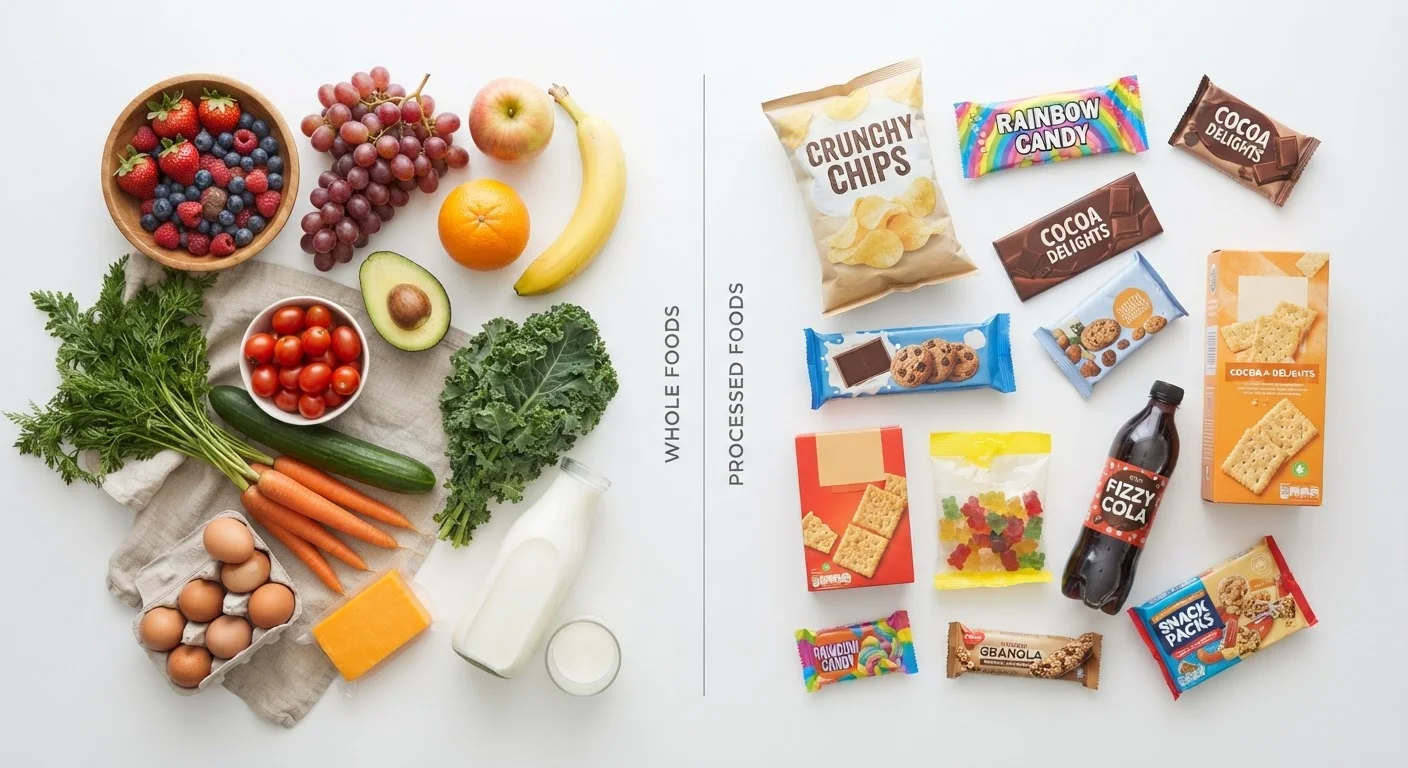
Key Takeaways
- Natural sugars come packaged with fiber, vitamins, and minerals that slow absorption and add nutritional value.
- Added sugars provide calories but no meaningful nutritional benefit beyond energy.
- The 2020-2025 Dietary Guidelines for Americans recommend limiting added sugars to less than 10% of daily calories.
- Most Americans consume far more added sugar than recommended, largely from beverages and packaged foods.
- Reading nutrition labels is the most reliable way to identify and limit added sugar intake.
Added vs. Natural Sugar
Natural sugars occur inherently in whole foods like fruit, vegetables, and dairy. Added sugars are any sugars or sweeteners introduced during food processing, preparation, or manufacturing - they are not naturally present in the ingredient. Nutrition guidelines specifically limit added sugars because they contribute calories without the accompanying nutrients found in whole foods.
The FDA requires food manufacturers to list 'Added Sugars' as a separate line item beneath 'Total Sugars' on the Nutrition Facts label, measured in grams and as a percentage of the Daily Value.
What Makes a Sugar 'Added'?
Sugar goes by many names on ingredient lists - cane sugar, high-fructose corn syrup, dextrose, maltose, agave nectar, and more. What unifies them as added sugars is not their chemistry but their origin: they were deliberately put into a food or drink during manufacturing or preparation. They were not there naturally.
By contrast, natural sugars are intrinsic to a food's structure. The lactose in a glass of milk, the fructose in a fresh peach, the glucose in a kernel of corn - these exist before any human processing takes place. When you eat the whole food, you consume those sugars alongside the fiber, protein, fat, vitamins, and minerals that were designed to accompany them.
This distinction matters because nutrition research consistently treats the two categories differently - and so do federal dietary guidelines. Understanding the difference helps you become a more informed reader of food labels. For a broader guide on decoding those labels, see our guide to reading a Nutrition Facts label.
How the FDA Labels Added Sugars
Since the updated Nutrition Facts label became mandatory for most manufacturers in 2020, 'Added Sugars' must appear as a distinct sub-line under 'Total Sugars,' expressed in grams and as a percentage of the Daily Value. The Daily Value for added sugars is set at 50 grams per day, based on a 2,000-calorie diet. This labeling change was specifically designed to help consumers distinguish between naturally occurring and added sugars at a glance.
Why the Distinction Matters for Health
The reason nutrition science draws a line between natural and added sugars comes down to what surrounds the sugar in the food matrix. Whole fruit, for instance, delivers fructose bundled with dietary fiber, which slows digestion and moderates the rise in blood glucose. Processed food with added sugar typically delivers the same calories with little to no fiber, vitamins, or other beneficial compounds.
Research has linked high intake of added sugars to increased risk of weight gain, elevated triglycerides, type 2 diabetes, and cardiovascular disease, though the scientific picture is nuanced and ongoing. The concern is not sugar as a molecule - it is the volume consumed, the absence of nutritional context, and the displacement of more nutritious foods in the diet.
17 tsp
Average daily added sugar intake for US adults
According to CDC dietary surveillance data, American adults consume approximately 17 teaspoons of added sugar per day - well above the recommended limit of about 12 teaspoons.
<10%
Recommended limit of daily calories from added sugars
The 2020-2025 Dietary Guidelines for Americans advise limiting added sugars to less than 10% of total daily caloric intake for adults and children over age 2.
~40%
Share of added sugar Americans get from beverages
Federal dietary data indicate that beverages - including soda, energy drinks, and sweetened coffees - account for a substantial portion of the added sugar consumed by US adults.
The difference between whole foods and ultra-processed foods is closely related here: added sugars are a hallmark ingredient in many ultra-processed products precisely because they enhance palatability cheaply.
Where Added Sugars Hide in the American Diet
Sweetened beverages - sodas, energy drinks, sweetened teas, and flavored coffees - are the single largest source of added sugars for Americans across most age groups, according to federal dietary surveillance data. But added sugars appear in places many people don't expect:
- Flavored yogurt - often contains as much added sugar as a small dessert
- Breakfast cereals - even those marketed as 'whole grain' or 'healthy'
- Pasta sauces and ketchup - savory products regularly use sugar as a flavor enhancer
- Bread and baked goods - including products not perceived as sweet
- Protein bars and granola - frequently marketed as health foods despite high added sugar content
This is why learning to read the 'Added Sugars' line on a Nutrition Facts panel - rather than relying on front-of-package claims - is such a practical skill. Our practical guide to everyday nutrition covers how to build this habit without feeling overwhelmed.
A Simple Label-Reading Habit
When evaluating a packaged food, go straight to the 'Added Sugars' line on the Nutrition Facts panel rather than scanning the front of the package. Front-of-package claims like 'naturally sweetened' or 'made with real fruit' are not regulated the same way and can be misleading. The added sugars line gives you a factual, standardized number to work with.
Putting It Into Practice
No single food needs to be entirely off-limits for most healthy adults. But awareness of where added sugars concentrate in the diet gives you an informed starting point for making adjustments if you choose to.
A few practical framings supported by dietary guidance:
- Prioritize whole fruits over fruit juices - juice removes fiber and concentrates sugar.
- Compare labels within a food category; added sugar content can vary significantly between similar products.
- Treat sweetened beverages as occasional choices rather than everyday staples.
- Notice how naturally sweet whole foods - fresh fruit, plain dairy, roasted root vegetables - can satisfy a sweet preference with nutritional benefit.
If you're also trying to improve your fiber intake alongside reducing added sugar, those two goals tend to reinforce each other. See our article on fiber - the nutrient most Americans underestimate for context on why both matter.
For questions about your specific health situation, a registered dietitian or your primary care provider is the best resource for personalized guidance.
This article is for informational and educational purposes only and is not a substitute for professional medical or nutritional advice. Always consult a qualified healthcare provider for guidance specific to your health needs.