| Most common workplace dress code | Business Casual |
| Formality levels (low to high) | Casual → Smart Casual → Business Casual → Business Formal → Cocktail → Black Tie → White Tie |
| Black tie requirement for men | Tuxedo with black bow tie |
| White tie events | State dinners, formal galas - extremely rare |
| Safe rule when unsure | Dress one level more formal than you think is needed |
Why Dress Codes Still Matter
Dress codes aren't about snobbery - they're a social shorthand that helps everyone arrive at the right level of formality and feel comfortable doing it. Getting it wrong, in either direction, can create unnecessary friction, whether you show up underdressed at a formal dinner or overdressed at a casual networking event.
The challenge is that dress codes are often stated without explanation. An invitation that says "business casual" or "festive attire" assumes you already know the rules. Most people don't - and that's completely normal. This guide decodes the most common dress code levels in plain language, so you know exactly what's expected. For a deeper look at how fit affects every outfit across formality levels, see how fit changes the way clothes look.
| Most common workplace dress code | Business Casual |
| Formality levels (low to high) | Casual → Smart Casual → Business Casual → Business Formal → Cocktail → Black Tie → White Tie |
| Black tie requirement for men | Tuxedo with black bow tie |
| White tie events | State dinners, formal galas - extremely rare |
| Safe rule when unsure | Dress one level more formal than you think is needed |
The Dress Code Spectrum, Explained
Think of dress codes as a ladder, from most relaxed at the bottom to most formal at the top. Here's what each level actually means in practice.
Casual
Casual means comfortable, everyday clothes - jeans, t-shirts, sneakers. There's still a baseline: clean, well-fitting, and free of visible damage. Loungewear and gym clothes typically don't qualify even for casual settings outside the home.
Smart Casual
This is where many people get tripped up. Smart casual sits between relaxed and polished - think dark jeans with a button-down shirt, or tailored trousers with a clean knit. The goal is put-together without being formal. Casual and smart casual are often confused, but the distinction is meaningful.
Business Casual
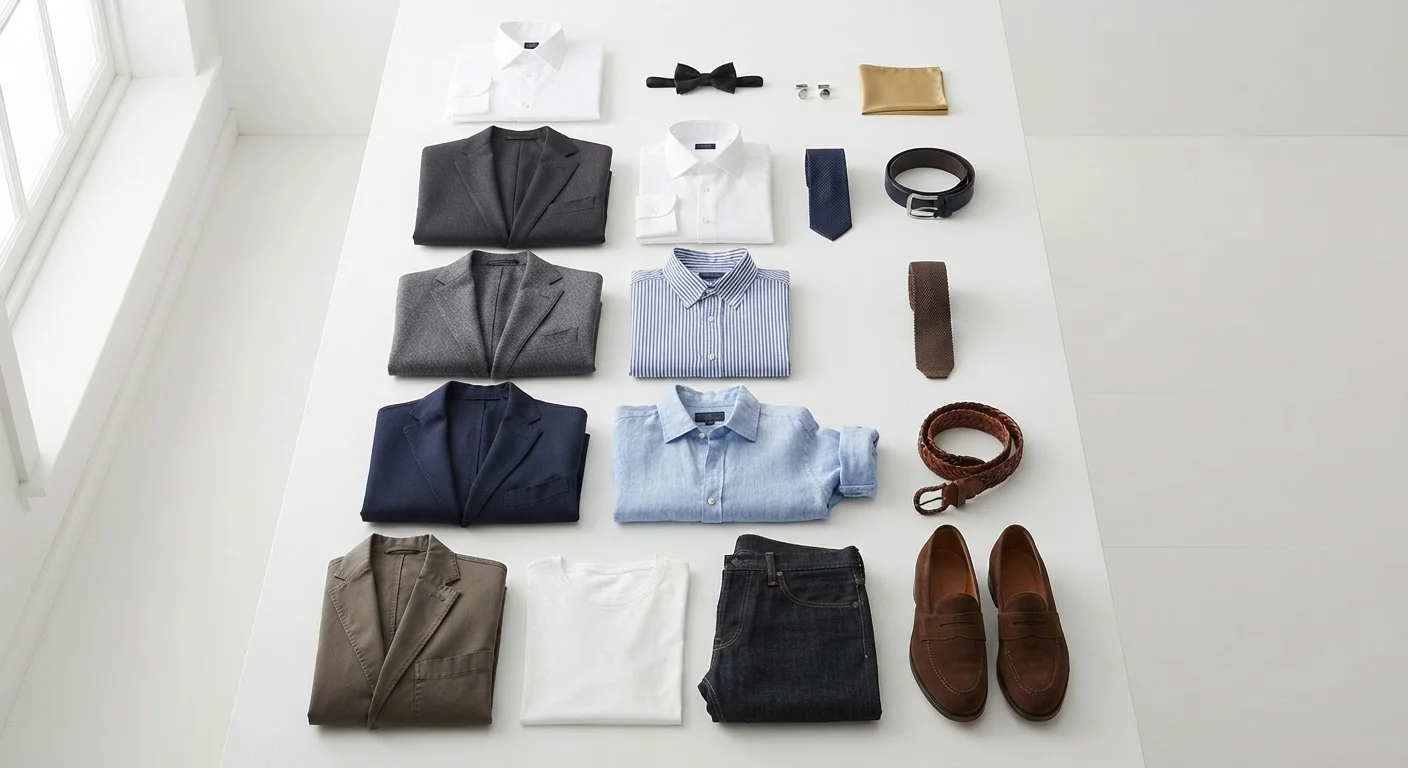
Business casual is the default dress code of modern professional environments. For most people, it means chinos or dress trousers, a collared shirt or blouse, and clean closed-toe shoes. Blazers are optional but appropriate. Jeans, sneakers, and visible logos typically fall outside this category, though some industries interpret it more loosely.
Business Formal / Professional
This calls for a complete suit or formal dress. Neutral, conservative colors - navy, charcoal, black - are standard. Accessories should be understated. This is the expectation for job interviews in traditional industries, court appearances, and similar high-stakes settings.
Cocktail Attire
Cocktail attire applies to evening events - think weddings, charity galas, or upscale parties. It typically means a knee-length dress or dressy separates for women, and a dark suit or sport coat with dress trousers for men. Formal gowns and tuxedos are generally too much.
Black Tie
Black tie is clear and specific: tuxedo (with a bow tie) for men, and a floor-length gown or formal cocktail dress for women. Deviating from this significantly risks standing out negatively at events where hosts have set a high formality expectation.
White Tie
White tie is the most formal dress code in existence and is rare outside state dinners and opera galas. It requires a tailcoat, white waistcoat, and white bow tie for men; full-length ball gowns for women. Treat this as a costume-level expectation - and follow the host's lead precisely.
Business Casual
A professional dress standard that's less formal than a suit but more polished than everyday clothing. It typically includes tailored trousers or chinos, collared shirts or blouses, and closed-toe dress shoes.
Black Tie
A formal evening dress code requiring a tuxedo with bow tie for men and a formal gown or dressy cocktail dress for women. It is most common at galas, formal weddings, and upscale benefit events.
Smart Casual
A dress level between casual and business casual. Outfits are neat and intentional - often mixing tailored and relaxed pieces - without crossing into formal territory.
Cocktail Attire
An evening dress code appropriate for upscale social events. Generally means knee-length or midi dresses for women and a dark suit for men. Less formal than black tie but more dressed up than business casual.
White Tie
The most formal Western dress code. Men wear a tailcoat, white waistcoat, and white bow tie; women wear full-length ball gowns. Reserved for state occasions, formal galas, and similar rare events.
Dress Code
A set of expectations or rules about appropriate clothing for a specific event, environment, or occasion. Dress codes communicate the tone and formality level the host or institution expects.
Practical Tips for Navigating Any Dress Code
When the dress code isn't clear, a simple rule applies: it's almost always better to err slightly more formal than less. Arriving overdressed is easier to correct - removing a blazer, rolling up sleeves - than the reverse.
If the invitation allows it, ask the host. Framing it as wanting to honor the occasion is both honest and well-received. Alternatively, look for context clues: the venue, the time of day, and the nature of the event all signal expected formality. A rooftop cocktail party at 7 p.m. and a Saturday afternoon backyard lunch have very different implied codes, even if neither is spelled out.
Fit matters across every level of formality. Clothes that are too loose or too tight undermine an otherwise appropriate outfit. For guidance on what good fit looks like in practice, fit is the factor most people overlook is a useful starting point.
Finally, personal style doesn't disappear at formal events - it just works within constraints. Choosing a distinctive tie, an interesting fabric, or a thoughtful accessory lets you express individuality while still respecting the dress code. For a broader framework on building a wardrobe that works across occasions, see building personal style from the ground up.